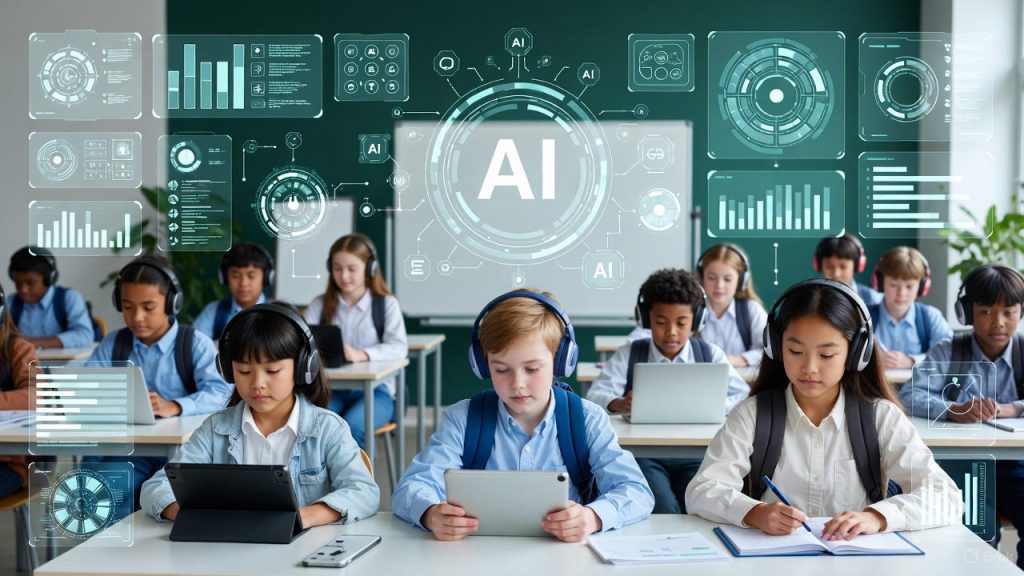
AI personalized learning is entering a pivotal phase in 2024. As decision-makers, education leaders, and L&D professionals rapidly adopt this technology, the benefits and gaps become increasingly clear. AI personalized learning platforms promise engagement gains and custom pathways, but they present practical barriers and critical implementation questions that typical coverage often overlooks. This guide unpacks what works, what limits exist, and how to implement these solutions with precision.
Key Takeaways
- AI personalized learning adoption is accelerating with measurable, but not fully verified, gains in engagement and retention.
- Concerns center on plagiarism, ethical use, privacy, and a lack of granular quantitative outcomes.
- Implementation requires careful attention to platforms, integrations, and under-addressed dynamics such as cross-cultural use and teacher-AI collaboration.
- The Rapid Expansion of AI Personalized Learning in 2024 and Future Prospects
- Effectiveness of AI Adaptive Learning Paths for Engagement and Outcomes
- Real-World Barriers in AI-Powered Customized Education
- Regulatory, Privacy, and Ethical Challenges
- What Everyone’s Missing: The Overlooked Dimensions of AI Personalized Learning
- Comparing Costs: AI-Driven Learning vs. Traditional E-Learning
- Implementation Essentials: Tech Requirements and Integration
- Case Studies and Measurable Results
- Conclusion
- FAQ
The Rapid Expansion of AI Personalized Learning in 2024 and Future Prospects
AI personalized learning is shifting from experimental to essential across education. The global market is projected to reach USD 9.15 billion by 2025, with a forecasted jump to USD 291.85 billion by 2035 at an annual growth rate over 41%. Higher education dominates market share, but adoption is accelerating in both K-12 and the corporate sector. In a recent survey, 64% of educators say AI technologies have enabled improved personalized instruction. These platforms offer tailored learning paths, real-time feedback, and dynamic content recommendationsdriving a fundamental change in how individuals learn and how organizations manage outcomes.
Effectiveness of AI Adaptive Learning Paths for Engagement and Outcomes
AI adaptive learning paths respond dynamically to learner inputs, providing unique pacing and support. Their impact is widely reported: McKinsey and OECD studies cite a 2030% boost in student engagement and retention after integrating adaptive AI systems. Notably, 90% of surveyed U.S. college students using AI tools rate them as more effective than private tutors, while 64% of teachers report improved personalization in their instruction.
Yet, there is a gap in fully granular outcomes. Most available metrics are self-reported improvements in engagement or perceived personalization, not peer-reviewed test score advances or long-term academic retention. To unlock sustained impact, institutions need stronger, independently validated data points.
Real-World Barriers in AI-Powered Customized Education
While benefits are clear, the risks and complaints are concrete. Instructor concerns are dominated by academic integrity: 72% cite AI-driven plagiarism or cheating as their main challenge. The push for policy is strong93% of educators surveyed are calling for new regulations specific to AI in education. For students, concerns include fair use of content and system transparency, while administrators wrestle with privacy, compliance, and budget uncertainties. Achieving truly customized student learning experiences requires a balance between technological promise and the real-world context of trust and policy.
Regulatory, Privacy, and Ethical Challenges
Personalized learning with artificial intelligence depends on rich student data, but this opens significant privacy and ethical questions. The demand for rigorous standards is clear: leading educator groups strongly urge new guidelines for student data handling. Algorithmic bias and opaque decision logic further demand scrutiny, since the consequences of flawed recommendations or under-addressed security risks are significant in academic and workplace settings. Establishing responsible practices for tailored educational content using AI is critical to ensure trust, legal compliance, and long-term system value.
What Everyone’s Missing: The Overlooked Dimensions of AI Personalized Learning
Market leaders often do not address key nuances that shape long-term success:
- Long-term retention effects: There is scarce research on whether personalized AI study paths result in stronger knowledge retention months or years later.
- Cross-cultural adaptability: AI models may reinforce biases or fail in diverse, non-English contexts if local curriculum and learning styles are ignored.
- Teacher-AI collaboration: The balance of roleswhen teachers “coach” the AI, and vice versaremains underexplored yet is essential for effective blended delivery.
Understanding these complexities provides a more real-world view than metrics alone.
Comparing Costs: AI-Driven Learning vs. Traditional E-Learning
Investing in AI adaptive systems comes with unique financial considerations. While growth in this market suggests initial costs for deploying tailored educational content using AI are higher than with legacy e-learning solutions, direct price benchmarks remain unpublished as of 2024. Lifecycle costsfactoring in data privacy enhancements, ongoing machine learning updates, and required staff trainingare significant variables not fully accounted for in public market studies.
| Cost Area | AI-Driven Learning Solutions | Traditional E-Learning Platforms |
|---|---|---|
| Licensing Fees | Variable, often premium | Lower, fixed per user/module |
| Implementation Time | Lengthier due to integrations | Shorter, more turnkey |
| Maintenance | Ongoing (AI model updates) | Lower, less frequent updates |
| Compliance/Privacy Add-ons | Significanttypically built-in or required | Less advanced, may need extra solutions |
Benchmarking these costs over time requires better disclosure from vendors and systematic post-implementation reviews within organizations.
Implementation Essentials: Tech Requirements and Integration
Successful personalized learning with artificial intelligence depends on careful technology planning. Most adaptive systems today are powered by machine learning, representing 60% of the adaptive AI market. In practice, this means most deployments use integrated platforms or virtual facilitators46% of solutions rely on orchestrating large, real-time data flows from multiple sources.
- Assess current learning infrastructure and identify compatibility gaps.
- Prioritize solutions that offer robust, documented APIs for interoperability.
- Establish strong staff training and change management plans to support both admin and instructional teams.
- Implement role-based data access, audit trails, and periodic reviews of student privacy safeguards.

Case Studies and Measurable Results
Current qualitative reports show clear sentiment: platforms like Squirrel AI and Century Tech report that 25% of users experience enhanced personalization, 18% improved engagement, and 64% of teachers see better instructional adaptation. However, few organizations publish validated outcomes such as gains in test scores, graduation rates, or documented ROI. The field urgently needs peer-reviewed, metrics-driven success stories to justify further investment.
For a broader perspective and related technology adoption factors, reference sector-wide breakdowns on AI education tools.

Conclusion
AI personalized learning holds tangible promise and growing value for education leaders and L&D managers in 2024. It can drive engagement and adapt content at scale. However, successful implementation requires precise attention to ethical, regulatory, and budget realitiesalong with technology integration and long-term research needs. Proceed with both optimism and critical oversight to ensure your investment delivers measurable educational results.
FAQ
How is AI personalized learning different from traditional e-learning?
AI personalized learning adapts lessons and pacing in real-time based on each learner’s inputs, skill gaps, and preferences. Traditional e-learning typically follows a fixed, one-size-fits-all pathway with limited adaptive feedback.
What are the biggest risks of implementing AI adaptive learning paths?
The main risks include increased potential for plagiarism, insufficient data privacy protections, and unintentional bias in recommendations. There can also be challenges with cost and complex integration requirements.
Are there published studies showing improved test scores from AI-powered customized education?
Most current reports are qualitative, citing improved engagement and personalization, but there is a shortage of peer-reviewed studies showing significant test score improvements or long-term retention increases.
What should schools and organizations prioritize when selecting an AI personalized learning platform?
Prioritize platforms with transparent algorithms, solid privacy protections, strong interoperability, and clear reporting features. Assess total cost of ownership and seek input from frontline instructors and end users.