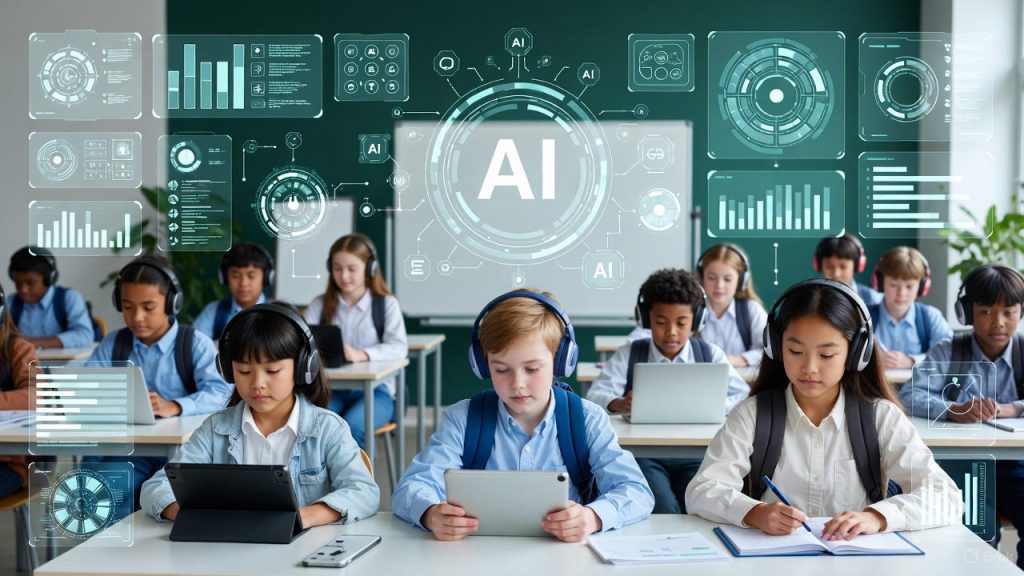
AI tutoring systems have become critical for education leaders looking to boost student support and institutional efficiency. The pace of adoption is staggering, but knowing what worksand what still has no solid evidenceis essential to making wise choices for your learners and budgets.
Key Takeaways
- AI tutoring systems see rapid growth, with global market value projected to reach nearly $8 billion by 2030.
- Widespread adoption outpaces hard evidence on academic impactpeer-reviewed research on outcomes is still missing.
- Educators must scrutinize transparency, user concerns, and documented real-world results before adopting new AI tutor platforms.
- The Rapid Rise of AI Tutoring Systems in Global Education
- How AI Tutors Are Used: Key Adoption Trends and User Preferences
- What We Still Don’t Know: Reporting Gaps and Documented Challenges
- Questions for the Future: What Educators and Stakeholders Need to Watch
- Conclusion
- FAQ
The Rapid Rise of AI Tutoring Systems in Global Education
AI tutoring systems are driving a new era in educational assistance. In 2024, the global AI tutors market value stood at around $1.63 billion. Forecasts project this figure could reach $7.99 billion by 2030, growing at an impressive 30.5 percent CAGR. Institutional adoption is also surging: 45.62 percent of K-12 schools now use some form of AI educational assistance, and higher education is not far behind.
Cloud-based AI tutoring solutions have captured the majority share, accounting for over 71 percent of the current market. This preference for scalable, on-demand solutions signals that institutions value flexibility and lower hardware costs when adopting AI tutoring systems.
Education leaders understand that AI tutors offer always-available help, rapid feedback loops, and the promise of closing gaps in student achievement. Even so, these figures highlight an urgent need to separate hype from reality, especially as investment and institutional reliance increase.
To deepen your understanding of technology’s impact on education overall, explore our comprehensive guide to AI education tools.
How AI Tutors Are Used: Key Adoption Trends and User Preferences
On-demand AI tutors are transforming support models at every education level. In the United States, 43 percent of college students have adopted AI tools such as ChatGPT for coursework, with a striking 90 percent finding these tools more effective than conventional face-to-face tutoring. Nearly half of US education leaders report using AI every day in operational and teaching contexts.
Demographically, demand is highest where digital and remote learning are priorities, notably in K-12 and STEM programs. STEM accounts for nearly 35 percent of all AI tutoring revenue. Cloud models continue to dominateoffering efficient scaling and better remote accesswhile pure AI tutors are projected to represent 59.4 percent of all solutions next year.
Artificial intelligence tutors for students now offer differentiated pathways, 24/7 support, and instant adaptation that most human tutors cannot match. However, most use cases focus on generic language or math, with less customization for specialized subjects and diverse learning needs.
What We Still Don’t Know: Reporting Gaps and Documented Challenges
Despite ongoing expansion, several critical gaps remain unaddressed in the AI tutoring landscape. Peer-reviewed studies have not yet established direct links between the use of 24/7 AI tutoring support and improved academic outcomes such as test scores or retention rates.
Key blind spots for decision-makers include:
- No widely published data on recurring challenges, negative user experiences, or side-by-side comparisons of AI versus human tutor effectiveness
- Absence of transparent and comparable pricing models between leading platforms and traditional tutoring
- Lack of clear information about how AI tutor feedback and guidance are validated for accuracy
- Few details about privacy, security, and data protection requirements among dominant AI educational assistance providers
Decision-makers should weigh these missing data points alongside high adoption rates. Transparent evidence around cost, risk, user satisfaction, and measurable results is still in its infancy. Until robust benchmarking exists, prudent evaluation will depend on pilot studies and close scrutiny of platform policies and practices.
Questions for the Future: What Educators and Stakeholders Need to Watch
To ensure responsible, impactful integration, education institutions must address questions top competitor articles usually overlook. The most forward-thinking leaders ask:
- Does the system support multilingual content and real-time translation?
- How does the platform address accessibilitysuch as screen-reading or dyslexia-friendly featuresfor students with disabilities?
- Are case studies, pilot results, or third-party data available on quantifiable academic improvements?
- What privacy, data protection, and student safety measures are documented and independently verified?
Institutions should also push vendors for demonstrations of AI tutor feedback and guidance workflows, user data controls, and customizable reporting. Without actionable visibility into these dimensions, adoption can introduce new risks or fail to deliver promised learning gains.

Advanced Analysis & Common Pitfalls
The combination of rapid adoption and underreported risks means leaders need a structured approach to analysis. While solution providers boast powerful learning benefits, most cannot supply third-party evaluations or evidence of measurable improvement. Choosing an AI tutoring system based on vendor claims alone risks unforeseen cost overruns or subpar impact on learning outcomes.
Pitfalls also include user pushback where platform guidance lacks nuance or cultural relevance. Security and privacy compliance, while claimed, is rarely validated by external audits. Furthermore, the hype around 24/7 always-available support often ignores real constraints like system downtime, curriculum misalignment, and lack of integration with existing learning management systems.
| AI Tutoring Feature | Documented Strengths | Exposed Gaps |
|---|---|---|
| 24/7 On-demand Support | Instant help, no scheduling needed | No peer-reviewed data on long-term academic impact |
| Pure AI Tutor Usage | Lower cost, scalable across large populations | Unclear guidance on feedback accuracy vs. human tutors |
| Student Data Security | Standard privacy claims in marketing | Limited published details about protection protocols |
| Market Adoption Rates | High and rising globally | Institutional outcomes not consistently tracked |

Conclusion
AI tutoring systems promise to transform education with scalable, accessible support. However, as of 2024, this market is outpacing its own evidence base. Leaders must balance the excitement of rapid adoption with an analytical mindsetinsisting on transparency, user-centric design, and rigorous outcome measurement before major investments. Stay data-driven, scrutinize vendor claims, and pilot thoughtfully to ensure AI educational assistance delivers the results your institution and students need.
FAQ
What percentage of K-12 schools have adopted AI tutoring systems so far?
Approximately 45.62 percent of K-12 institutions globally have integrated some form of AI educational assistance into their operations as of 2024.
Are AI tutors more effective than human tutors for students?
Ninety percent of US college students surveyed in 2024 rated AI tutor tools as more effective than standard human tutoring, but independent studies directly comparing learning outcomes are not yet available.
What data privacy concerns exist for AI tutoring systems?
While most platforms claim to protect student data, specific protocols and compliance measures are not widely published. Education leaders should request detailed privacy and security documentation before any adoption.
What types of feedback do AI tutoring systems provide?
Most AI tutors offer instant, automated responses and guidance. However, transparency about how feedback is generated and validated is still limitedprompting the need for careful review of each vendor’s approach.
Where can I learn more about personalized AI learning journeys?
You can explore practical strategies for engagement in our feature on AI personalized learning.