Imagine a classroom where every student’s learning style is understood and met. Where boring tasks are done quickly, and teachers can really help students grow. This dream is now a reality, thanks to Artificial Intelligence (AI) in education.
AI has changed education for the better, with 75% of teachers seeing better results. It brings personalized learning, automated grading, and more. Tools like Microsoft Copilot for Education make teaching and learning better, offering content and feedback for each student.
But, using AI in schools comes with challenges. Handling lots of student data raises privacy and security worries. It’s key to follow rules like FERPA to keep information safe and trust high.
AI in education is a game-changer. It can change how we learn, teach, and handle school tasks. By knowing its benefits and challenges, we can make sure every student gets the chance to succeed.
Transforming Learning Experiences with AI
Artificial intelligence (AI) is changing education in big ways. AI looks at lots of data to make learning fit each student’s needs. This changes how we learn.
Systems powered by AI give feedback right away and make learning plans for each student. This is thanks to natural language processing for teaching.
AI helps students learn at their own speed. They get activities that match how they learn best. These systems also help fix learning gaps and improve understanding.
AI makes grading faster and easier. This means teachers can spend more time teaching and helping students. Students get feedback quickly and in detail.
Personalized Learning Paths
The World Economic Forum says AI can make learning 30% better. It helps students stay interested and do well in school. AI makes learning plans that fit each student’s needs.
AI-Driven Assessment Tools
AI makes tests fairer and more accurate. McKinsey & Company found students do 20% better with AI tools. AI grading saves teachers time so they can help students more.
“AI in education contributes to personalized learning, adaptive learning platforms, intelligent tutoring systems, automated grading, and administrative tasks.”
AI is making education better in many ways. It helps teachers tailor learning to each student. This leads to better grades, more interest in learning, and more time for teaching.
Enhancing Teacher Efficiency through AI
Artificial Intelligence (AI) is changing how teachers do their jobs. It automates simple tasks, freeing up time for better lesson plans and student help. This lets teachers focus more on teaching and less on paperwork.
Automating Administrative Tasks
AI makes tasks like scheduling and tracking easier. It helps teachers create better lesson materials. This means more time for teaching and talking with students.
Support for Lesson Planning
AI chatbots help with tasks like emails and schedules. This lets teachers spend more time on planning. AI also gives insights to improve teaching.
AI in Professional Development
AI helps with training by analyzing data. Teachers use AI for better visual aids and math lessons. This makes learning more interesting and relevant.
“AI-powered learning analytics are transforming the way teachers approach their responsibilities, freeing up time and providing valuable insights to support their professional growth and student success.”
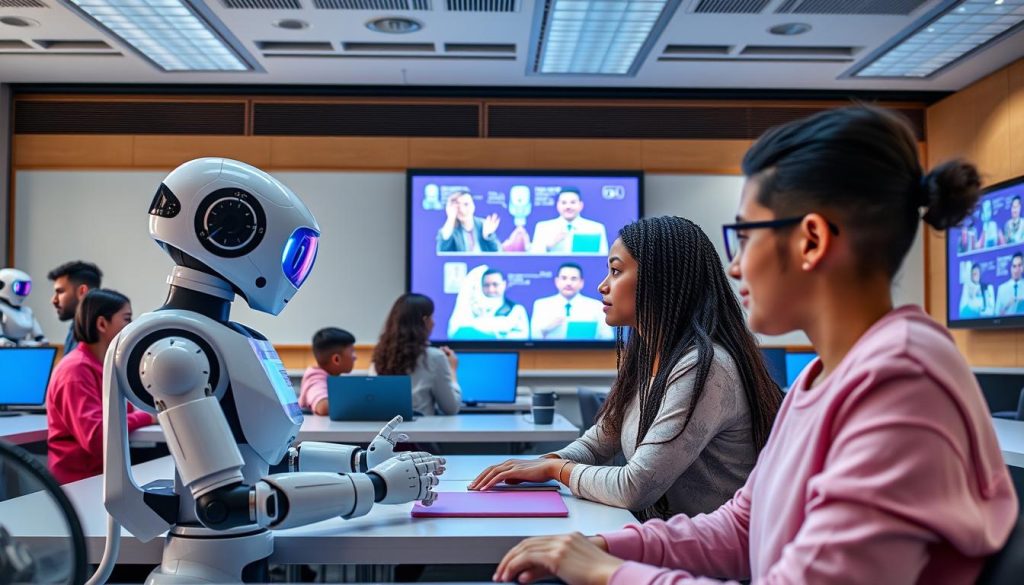
AI in education has its ups and downs. But it’s clear it can make teaching better and students learn more. By using AI wisely, teachers can create a better learning space for everyone.
Impact of AI on Student Engagement
Artificial intelligence (AI) has changed how students learn. It makes learning more interactive and fun. AI helps students work together and create their own content.
AI creates interactive learning environments. It uses virtual labs, games, and platforms for students to learn by doing. This approach makes learning more engaging and helps students learn faster.
Gamification and AI Integration
Gamification with AI makes learning more exciting. It uses games to teach, making learning fun and rewarding. This method keeps students interested and helps them solve problems.
AI also makes learning personal. It uses data to tailor lessons to each student. This way, learning fits each student’s needs and interests.
“AI in education enables personalized learning, providing real-time, individualized guidance and content adaptation to enhance the learning experience for each student.”
AI’s role in education will only grow. Schools are using AI to make learning more fun and personal. This helps students succeed in today’s world.
The Role of AI in Educational Equity
Artificial Intelligence (AI) can make education fairer by helping more people get access to learning. But, not all students have the same chance to use AI tools. Schools need to make sure everyone has equal access to AI and teach both students and teachers how to use it.
Bridging Gaps through Customization
AI can make learning fit each student’s needs, making it more fun and effective. Adaptive learning technologies change how and what students learn based on their progress and how they learn best. This way, every student gets the help they need to do well.
Access to Resources for All Learners
To fix AI bias, teachers should use AI assessment tools that are fair and include many viewpoints. Giving all students the same chance to use top-notch AI can help them grow and succeed, no matter their background.
| Potential AI Bias in Education | Strategies to Promote Equity |
|---|---|
|
|
By tackling these issues, schools can use AI to make learning fairer and more inclusive. This way, every student can achieve their best.
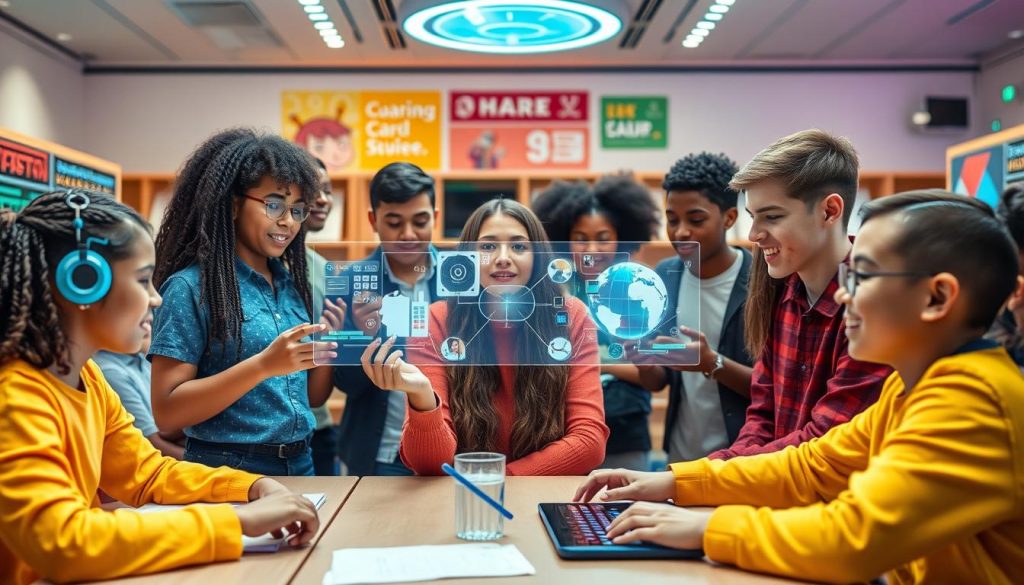
Future Trends in AI and Education
AI technology is getting better, and it will change education a lot. Intelligent tutoring systems are becoming more common. They use machine learning to give each student a learning plan that fits their needs.
These systems check how well students are doing and adjust lessons. They also give feedback right away. This makes learning better for everyone.
AI in schools will grow even more. AI will help make education plans based on data. This will help teachers and school leaders make better choices for students.
AI will also help with things like adaptive learning and virtual assistants. It will help students get ready for their future careers.
But, there are challenges to using AI in schools. Schools need to get used to new technology and deal with costs. They also need strong technology to use AI well.
Teachers and school leaders need training to use AI tools. This will help them use AI to improve education. It will make the classroom of the future a reality.