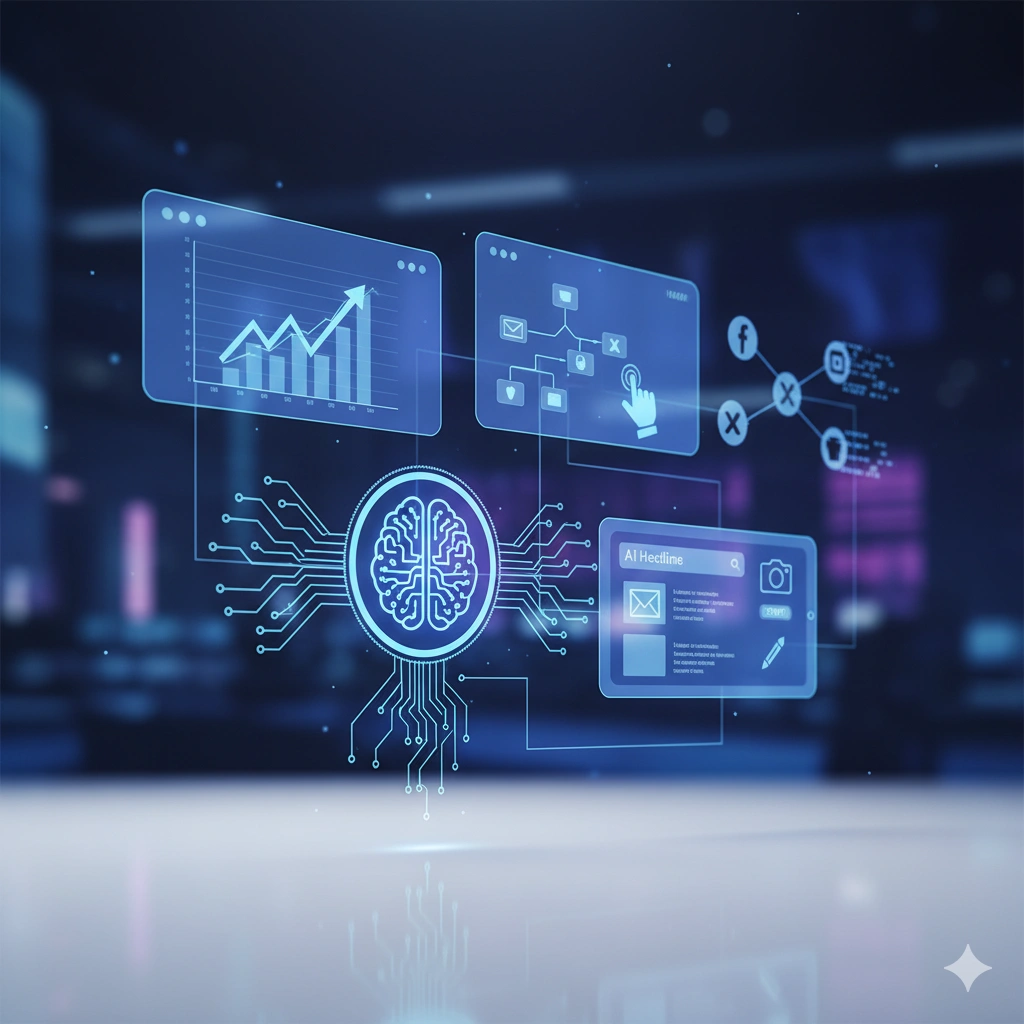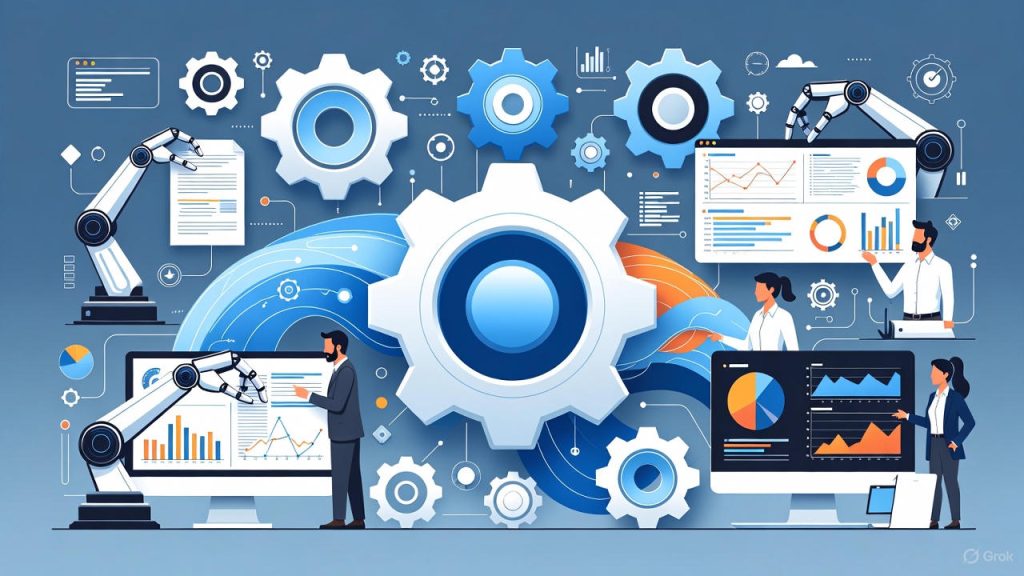
The workplace is undergoing a profound transformation as artificial intelligence reshapes how we work, collaborate, and create value. The Future of AI in the Workplace promises both unprecedented opportunities and significant challenges, fundamentally altering job roles, skill requirements, and productivity metrics across industries. As organizations worldwide embrace AI technologies, understanding their impact becomes crucial for businesses, employees, and policymakers preparing for tomorrow’s work environment.
The Future of AI in the Workplace: A Comprehensive Overview
The integration of artificial intelligence into workplace environments represents one of the most significant shifts in modern business history. From automating routine tasks to enhancing decision-making processes, AI is revolutionizing how organizations operate and compete in the global marketplace.
Current AI adoption rates indicate that over 70% of enterprises are exploring or implementing AI solutions in some capacity. This rapid adoption spans across industries, from healthcare and finance to manufacturing and retail, each finding unique applications that drive efficiency and innovation.
Current State of AI Integration in Business
Popular AI Applications in Today’s Workplace
Organizations are implementing various AI technologies to streamline operations and enhance productivity:
- Natural Language Processing (NLP) for customer service chatbots and document analysis
- Machine Learning algorithms for predictive analytics and data insights
- Computer vision for quality control and security monitoring
- Robotic Process Automation (RPA) for repetitive task automation
- AI-powered analytics for business intelligence and reporting
Industry-Specific Implementations
Different sectors are leveraging AI in unique ways tailored to their specific needs:
Healthcare: AI assists in diagnostic imaging, drug discovery, and patient care optimization, reducing medical errors and improving treatment outcomes.
Finance: Algorithmic trading, fraud detection, and risk assessment have become standard practices, enabling faster and more accurate financial decisions.
Manufacturing: Predictive maintenance, supply chain optimization, and quality control systems powered by AI are reducing downtime and improving product quality.
Retail: Personalized recommendations, inventory management, and dynamic pricing strategies are enhancing customer experience and operational efficiency.
Impact on Employment and Job Roles
Jobs at Risk of Automation
While AI brings numerous benefits, certain job categories face higher risks of automation:
- Data entry clerks and administrative assistants
- Manufacturing assembly line workers
- Basic customer service representatives
- Routine accounting and bookkeeping roles
- Simple content creation and copywriting tasks
However, it’s important to note that AI job displacement doesn’t necessarily mean job elimination. Many roles are evolving rather than disappearing entirely.
Emerging Job Opportunities
The AI revolution is simultaneously creating new employment opportunities:
- AI specialists and machine learning engineers
- Data scientists and analysts
- AI ethics and compliance officers
- Human-AI interaction designers
- AI trainers and prompt engineers
These emerging roles require specialized skills and offer significant growth potential for professionals willing to adapt and learn.
Job Transformation vs. Job Replacement
Rather than wholesale replacement, many jobs are experiencing transformation. For example:
- Accountants now focus on strategic financial planning while AI handles routine calculations
- Customer service representatives manage complex issues while chatbots handle basic inquiries
- Content creators use AI tools for research and ideation while maintaining creative control
- Healthcare professionals leverage AI diagnostics while providing personalized patient care
Essential Skills for the AI-Driven Future
Technical Skills in Demand
As workplaces become increasingly AI-integrated, certain technical competencies are becoming essential:
Programming and Data Analysis: Understanding languages like Python, R, and SQL enables professionals to work effectively with AI systems and interpret data-driven insights.
AI Literacy: Basic understanding of machine learning concepts, neural networks, and AI capabilities helps employees collaborate effectively with AI tools.
Digital Fluency: Proficiency in various software platforms, cloud computing, and digital collaboration tools is fundamental in AI-enhanced workplaces.
Soft Skills That Remain Irreplaceable
While AI excels at technical tasks, human skills remain invaluable:
Critical Thinking and Problem-Solving: The ability to analyze complex situations and develop creative solutions complements AI’s analytical capabilities.
Emotional Intelligence: Understanding and managing emotions, building relationships, and providing empathy remain uniquely human strengths.
Adaptability and Continuous Learning: The rapidly evolving AI landscape requires professionals who can quickly adapt to new technologies and methodologies.
Communication and Collaboration: Effectively communicating with both humans and AI systems, translating technical concepts for non-technical stakeholders, and facilitating cross-functional collaboration are increasingly important.
Future workplace skills Development Strategies
Organizations and individuals can prepare for the AI-driven future through:
- Continuous learning programs and upskilling initiatives
- Cross-functional training to develop hybrid skill sets
- Mentorship programs pairing AI-savvy employees with others
- Regular assessment of skill gaps and targeted training interventions
- Partnerships with educational institutions for ongoing professional development
AI’s Role in Enhancing Productivity
Automation of Routine Tasks
AI’s most immediate productivity benefit comes from automating repetitive, time-consuming tasks:
- Document processing and data extraction
- Scheduling and calendar management
- Email filtering and response suggestions
- Report generation and data visualization
- Inventory tracking and ordering
This automation frees employees to focus on higher-value activities requiring human creativity and judgment.
Enhanced Decision-Making Capabilities
AI provides powerful analytical capabilities that improve decision-making:
Predictive Analytics: AI algorithms analyze historical data to forecast trends, enabling proactive business strategies.
Real-time Insights: Continuous monitoring and analysis provide immediate feedback on business operations and market conditions.
Risk Assessment: AI models evaluate potential risks across various business scenarios, supporting more informed decision-making.
Performance Optimization: Machine learning identifies patterns and inefficiencies, suggesting improvements to business processes.
AI productivity tools Transforming Daily Work
Modern AI-powered tools are revolutionizing how employees approach their daily responsibilities:
Writing and Content Creation: AI assistants help with drafting, editing, and optimizing written content while maintaining human oversight and creativity.
Project Management: Intelligent scheduling, resource allocation, and progress tracking systems optimize project workflows.
Customer Relationship Management: AI-enhanced CRM systems provide deeper customer insights and automate relationship management tasks.
Research and Analysis: AI tools can quickly process vast amounts of information, summarizing key findings and identifying relevant insights.
Industry-Specific AI Applications
Technology Sector
The technology industry leads in AI adoption, with applications including:
- Software development automation through AI-powered coding assistants
- Quality assurance and testing using machine learning algorithms
- Cybersecurity enhancement through intelligent threat detection
- User experience optimization based on behavioral analytics
Healthcare Industry
Healthcare organizations are leveraging AI to improve patient outcomes and operational efficiency:
- Diagnostic imaging analysis for faster and more accurate diagnoses
- Drug discovery acceleration through predictive modeling
- Personalized treatment plans based on patient data analysis
- Administrative task automation to reduce healthcare costs
Financial Services
The financial sector utilizes AI for:
- Algorithmic trading and investment optimization
- Fraud detection and prevention through pattern recognition
- Credit scoring and risk assessment using alternative data sources
- Regulatory compliance monitoring and reporting automation
Manufacturing and Supply Chain
Manufacturing companies implement AI for:
- Predictive maintenance to prevent equipment failures
- Quality control automation using computer vision
- Supply chain optimization through demand forecasting
- Production planning based on real-time data analysis
Challenges and Concerns
Ethical Considerations
The widespread adoption of AI in the workplace raises important ethical questions:
Bias and Fairness: AI systems may perpetuate or amplify existing biases in hiring, performance evaluation, and decision-making processes.
Privacy and Surveillance: Employee monitoring through AI raises concerns about workplace privacy and personal autonomy.
Transparency and Accountability: The “black box” nature of some AI algorithms makes it difficult to understand and explain decision-making processes.
Job Displacement Ethics: Organizations must consider their responsibility to employees whose roles may be automated.
Implementation Challenges
Organizations face several obstacles when implementing AI solutions:
Technical Integration: Existing systems may require significant upgrades or replacements to accommodate AI technologies.
Cost and Resource Allocation: AI implementation requires substantial investment in technology, training, and infrastructure.
Change Management: Employees may resist AI adoption due to fears about job security or unfamiliarity with new technologies.
Data Quality and Availability: AI systems require high-quality, relevant data that many organizations struggle to provide.
Regulatory and Compliance Issues
As AI becomes more prevalent, regulatory frameworks are evolving:
- Data protection regulations affecting AI training and deployment
- Industry-specific compliance requirements for AI applications
- International standards and guidelines for AI development and use
- Liability and responsibility frameworks for AI decision-making
Preparing Organizations for AI Integration
Strategic Planning for AI Adoption
Successful AI integration requires comprehensive strategic planning:
Assessment and Goal Setting: Organizations must evaluate their current capabilities, identify opportunities for AI application, and set clear objectives.
Phased Implementation: Gradual rollout of AI solutions allows for learning, adjustment, and risk mitigation.
Change Management: Comprehensive communication and training programs help employees understand and embrace AI technologies.
Performance Measurement: Clear metrics and KPIs track the success of AI initiatives and guide future improvements.
Building AI-Ready Infrastructure
Organizations need robust infrastructure to support AI applications:
Data Management Systems: Centralized, high-quality data repositories enable effective AI training and deployment.
Computing Resources: Adequate processing power and storage capacity support AI workloads and analytics.
Security Frameworks: Enhanced cybersecurity measures protect AI systems and sensitive data.
Integration Capabilities: APIs and middleware facilitate smooth integration between AI tools and existing systems.
Cultural Transformation
Creating an AI-ready organizational culture involves:
Leadership Commitment: Executive support and vision drive successful AI adoption across the organization.
Employee Engagement: Involving employees in AI planning and implementation builds buy-in and reduces resistance.
Learning Culture: Encouraging experimentation, continuous learning, and adaptation supports AI innovation.
Collaboration: Cross-functional teams bring diverse perspectives to AI projects and ensure comprehensive solutions.
The Road Ahead: Predictions and Trends
Emerging Technologies and Capabilities
Several technological developments will shape the future AI workplace:
Generative AI Advancement: More sophisticated content creation, code generation, and design capabilities will transform creative and technical roles.
Edge AI Computing: Distributed AI processing will enable real-time decision-making and reduce dependence on cloud infrastructure.
Quantum-Enhanced AI: Quantum computing may dramatically improve AI processing capabilities and enable new applications.
Neuromorphic Computing: Brain-inspired computing architectures could make AI more efficient and capable of human-like reasoning.
AI workplace trends to Watch
Key trends shaping the future AI workplace include:
Hyper-Personalization: AI will enable highly customized work experiences, tools, and environments tailored to individual preferences and needs.
Augmented Intelligence: Rather than replacing humans, AI will increasingly augment human capabilities, creating powerful human-AI partnerships.
Autonomous Workflows: End-to-end process automation will become more sophisticated, handling complex multi-step procedures with minimal human intervention.
Predictive Work Management: AI will anticipate needs, suggest optimizations, and proactively address challenges before they become problems.
Long-term Workplace Evolution
The next decade will likely see:
- Remote and distributed work enhanced by AI-powered collaboration tools
- Skills-based organizations where roles are defined by capabilities rather than traditional job titles
- Continuous learning platforms integrated into daily work routines
- AI democratization making advanced capabilities accessible to all employees
- Sustainable AI practices addressing environmental and social impact concerns
Conclusion
The future of AI in the workplace represents both tremendous opportunity and significant responsibility. Organizations that thoughtfully integrate AI technologies while investing in their workforce will likely emerge as leaders in the new economy. Success will depend not just on adopting the latest AI tools, but on creating environments where humans and AI can collaborate effectively to drive innovation, productivity, and meaningful work.
As we navigate this transformation, the key lies in maintaining focus on human values while embracing technological advancement. The future workplace will be defined not by the replacement of human workers, but by the enhancement of human capabilities through intelligent automation and AI-powered insights.
The journey toward an AI-integrated workplace requires careful planning, continuous learning, and adaptive leadership. Organizations and individuals who embrace this change proactively will be best positioned to thrive in the AI-driven future.
For more insights on AI workplace transformation, explore comprehensive resources from the MIT Technology Review.